Preparing London Commercial Properties with the Right Waterproofing Solutions
For anyone involved in commercial development in London, choosing the right waterproofing solution is one of the most important decisions you will make at the build stage. From hotels and offices to retail units and mixed-use schemes, durability starts at the structure. There is no single answer. The right approach depends on the type of building, the nature of the space below ground, and the level of water or damp ingress risk involved.
Water ingress does not announce itself until the damage is already done. By that point, you are looking at costly repairs, potential structural work, and disruption to live operations. That is why we always recommend addressing waterproofing during the planning and build phase, not as an afterthought.
Why Waterproofing Solutions Matter in Commercial Builds
Standard concrete is porous. Over time, water finds its way through pores and micro-cracks, leading to dampness, corrosion of reinforcement, and eventual structural compromise. Depending on the construction method and the hydrostatic pressure the structure faces, waterproof concrete may be specified as part of the solution, but it is rarely sufficient on its own. In a city like London, where groundwater tables are rising across the basin and weather exposure is constant, the demand on below-ground and partially below-ground structures is significant.
Commercial properties face higher occupancy and use intensity than residential ones. Basements in hotels may house spa facilities, mechanical plant, and storage. Office basements often carry electrical infrastructure or car parking. Getting the waterproofing specification right the first time, based on the specific requirements of each space, protects not just the building fabric but the business operations inside it.
Our waterproofing services are designed specifically for this environment, covering both new commercial builds and structures where existing protection has failed.
Choosing the Right System: What Structural Waterproofing Involves
You might be asking: what exactly does structural waterproofing involve, and how do you know which system is right for your project? Structural waterproofing focuses on protecting a building at a deeper level, addressing the foundations, basement walls, retaining structures, and floor slabs. The system selected depends on the performance required, the condition of the existing structure, and the intended use of the space.
There are three main protection types defined under BS8102:2022, the current British Standard for below-ground waterproofing. Type A uses barrier systems such as cementitious renders, membranes, and coatings. Type B involves structurally integral watertight concrete, used predominantly in new construction where waterproof concrete is specified as part of the structural design. Type C uses cavity drainage to manage rather than block water ingress. In many London projects, particularly where hydrostatic pressure is high, a combination of two or more types delivers the most reliable outcome.
You can read more about how these systems are applied on our structural waterproofing renders page.
The Role of Internal Waterproof Render
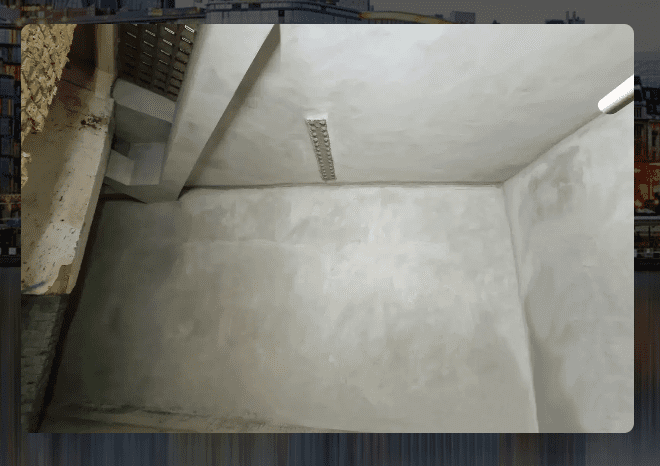
For existing commercial buildings where external access is limited or impractical, internal waterproof render is often the most effective approach. This system involves applying a cementitious render directly to interior walls, floors, and soffits, creating a barrier that holds back groundwater from the inside.
Waterproof renders are applied in three layers. The first is a bonding coat applied to the prepared substrate. The second is an intermediary coat, sometimes called a spritz coat, which is left with an open texture to support adhesion. The third is a closed float finish that forms the final waterproof barrier. These renders are categorised as Type A protection under BS8102:2022, meaning they are designed to prevent ingress, not just contain it.
Why Surface Preparation Makes All the Difference
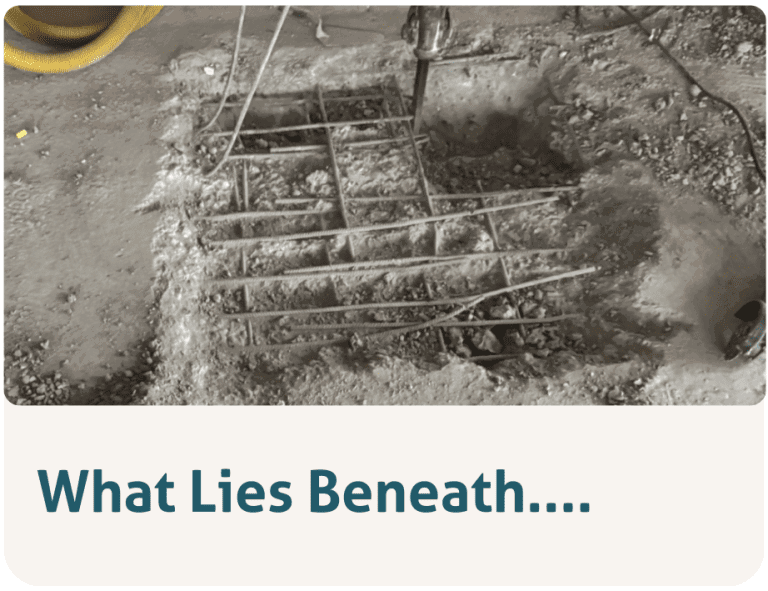
A render system is only as good as the surface it is applied to. One of the most important preparatory steps is surface laitance removal. Laitance is a weak, paste-like layer that forms on the surface of concrete during curing. If it is left in place, waterproofing coatings will not bond correctly and performance will be compromised from day one.
Beyond laitance, good surface preparation involves removing contamination, repairing cracks and damaged areas, and ensuring the substrate is structurally sound before any waterproofing product goes on. Skipping these steps is one of the most common reasons waterproofing systems fail prematurely. We never shortcut preparation on any commercial project.
Matching the Solution to the Space
Different spaces within the same commercial building may require different levels of protection. BS8102:2022 defines four grades of waterproofing performance. Grade 1a tolerates some seepage where it does not affect the intended use. Grade 3 requires no water ingress or damp areas at all, and may require ventilation support. The grade required for a basement car park is different from the grade required for an occupied plant room, a hotel spa, or a ground-floor retail unit.
This is why a tailored assessment matters before any work begins. We look at the structure, the space, the water table conditions, and the performance grade required, then specify the appropriate combination of systems. That might be internal waterproof render alone, or it might combine render with cavity drainage and a sump pump arrangement, or a membrane system applied at specific junctions.
Take a look at our completed projects to see how we have approached waterproofing across a range of commercial sectors in London.
Why Getting It Right from the Start Saves Money
Retrofitting waterproofing after construction is always more expensive and more disruptive than building it in from the outset. With new commercial developments, the window to specify the correct systems, including waterproof concrete where appropriate, apply renders to clean new surfaces, and integrate cavity drainage where needed, is during the build phase. Once a building is occupied, every hour of remedial work carries an operational cost.
Investors and tenants increasingly want assurance that the building they are committing to will perform over the long term. A properly waterproofed structure reduces future maintenance liability and supports the overall value of the asset. For London’s commercial property market, these are not minor considerations.
If you are at the planning or early construction stage, speak to us before decisions are made. Our team at Gunite Waterproofing has been delivering waterproofing solutions across London for over 30 years and can guide you through design, specification, and installation.
FAQs
What is waterproof concrete?
It is concrete that is either designed with a low water-to-cement ratio or treated with admixtures to resist moisture penetration. It is one method of waterproofing, categorised as Type B under BS8102:2022, and is predominantly used in new construction. It is not a standalone solution for most commercial waterproofing requirements.
What is internal waterproof render?
A cementitious render system applied to the interior faces of walls, floors, and soffits to create a barrier against moisture. It is particularly useful where external waterproofing is not accessible and is categorised as Type A protection under BS8102:2022.
What is surface laitance removal?
The process of removing a weak surface layer from concrete or brickwork before waterproofing products are applied. Without this step, coatings cannot bond correctly, which significantly reduces the lifespan of the waterproofing system.
Can waterproofing be added after construction?
Yes, but it is considerably more complex and costly than specifying it during the build phase. Remedial waterproofing on occupied commercial premises often involves significant disruption. Early specification is always the better approach.
Protect Your Commercial Project with Expert Waterproofing
Waterproofing is a core part of any credible commercial build in London. The right solution depends on your structure, your space, and your performance requirements. We will help you get the specification right from day one. Contact us to discuss your project, or visit our homepage to learn more about what we do.